

As the world moves further into a digital age, most organizations will eventually be forced to undergo some level of digital transformation to enhance efficiency and become more data-driven. However, according to studies conducted by Deloitte and others, 70% of businesses that invest heavily in digital transformation programs ultimately fail to realize their investment as follows:
Businesses using technology will have many existing processes that are mostly manual. Without first developing a roadmap of the technology investments needed to make significant operational changes to their existing process, many organizations simply spend a large amount of money on tools that will only help them automate some areas of their operations. This double-edged sword often leaves organizations with technology tools that do not align with their overall operational goals and objectives.
1.Businesses seeking to create digitally-transformed operations must first have a clear definition of what digital transformation means to them as it relates to their business. Without this clearly defined vision, those businesses that invest heavily in digital transformation programs will likely be disappointed when they realize that they spent more on the tools than are helping them to transform into a digitally-transformed organization.
2.Business seeking to undergo digital transformation must understand the potential negative impacts that Technology adoption will have on their company’s culture. Digital Transformation is not just a new way to use technology but also requires a cultural shift in how an organization operates. This shift means that employees will have to learn new ways to perform certain tasks, and many employees may resist using new tools for various reasons – fear of complexity, lack of training, and a belief that the new tools will replace their jobs. Ultimately this resistance leads to low levels of adoption and ultimately success with their Digital Transformation initiative will be diminished.
Digital 360 Solution “Digital 360’s comprehensive, scalable solution includes structured onboarding of employees and a variety of support services to help employees become familiarized with the new digital processes. The result is greater user adoption, quicker implementation, and sustainable long-term success.
- Outdated Legacy Systems and Fragmented Data
The inability of antiquated legacy systems to communicate or “talk” with other legacy systems can create:
- Data silos.
- Inefficient use of resources.
- Incorrect reporting.
- Duplicated effort using manual processes.
- Slow, ineffective decision-making.
- Fragmentation of Data within Multiple Locations
Fragmentation of data between various locations is one of the leading reasons companies experience digital transformation failure in industries such as manufacturing, retail, logistics, and healthcare.
Preventative Solution: Digital 360 combines systems for Enterprise Resource Planning (ERP), Customer Relationship Management (CRM), Point of Sale (POS), Human Resource Management (HRM), Billing, and Custom Solution Development into a central unified interface that allows users to have access to real-time dashboards, automate reports, and use predictive analytical tools all in one location.
- Technology Solutions Instead of Problem Solving
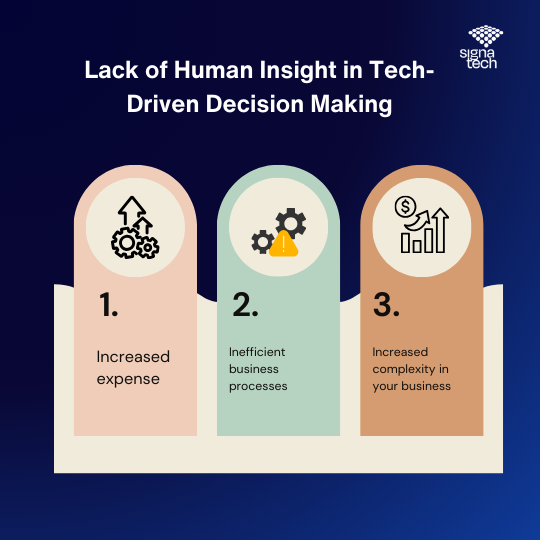
Many companies use new and innovative technology solutions based solely on the current trending technologies, e.g., artificial intelligence (AI), automation, and analytics, etc. Digital Transformation should be the means to solve the issues facing your business. When you use solutions that don’t match your business processes, your solutions result in the following:
Limitations of use.
- Increased expense.
- Inefficient business processes.
- Increased complexity in your business.
- This is another cause of failure for Digital Transformation.
Preventative Solutions: Digital 360 evaluates your current business process prior to recommending technology solutions. All technology solutions recommended are based on the following metrics:
- Return on Investment (ROI).
- Useability.
- Scalability.
- Compatibility to current systems.
- Lack of Real-Time Visibility in Data
Organizations that rely upon manual reporting or outdated information will experience a lack of visibility in their business and are therefore unable to act with urgency or make timely decisions.Digital transformation failure is largely due to the inability of most companies to obtain real-time visibility into their operations, especially in fast-moving industries.
Companies lack access to real-time visibility into their business operations, resulting in:
Stock-outs or overstock,Production delays,Loss of revenue,Loss of customer satisfaction. Digital 360 provides insight into business operations in real-time through the use of dashboards. Digital 360 provides a view of all business operations.
This provides instant access to real-time data, allowing leaders to make better decisions, reduce waste, and expedite growth. Lack of collaboration between different departments is another major reason digital transformation efforts fail to succeed.
6.Digital transformation requires all departments to collaborate and work together in a unified manner. If each department operates within their own systems, digital transformation will collapse due to the following factors:Miscommunication,Duplication of efforts,Inconsistent data,Slow processes. The lack of interdepartmental collaboration is one of the reasons that users continue to experience digital transformation failures.
Digital 360 eliminates this problem by automatically connecting all departments through a single ecosystem. By creating an organization-wide view of all digital transformation processes, Digital 360 provides an organization-wide approach to streamline operations. Digital transformation is not a single event; rather, it is an ongoing process that requires organizations to continuously improve. Many organizations that experience failure with their digital transformation fail because they have failed to consistently monitor, optimize and improve their digital transformation activities.
7. Digital transformation requires organizations to adopt a continuous improvement mindset in order to achieve success over the long term. Digital 360 provides your organization with a digital ecosystem that continuously grows and evolves in order to help your organization succeed long-term.
Digital 360 eliminates all of the barriers to producing a successful digital transformation.
Digital 360 provides:
Clearly defined strategy, Execution and definition of end-to-end integrated process, Real-time analytic reporting, Automated workflow processes, Collaborative inter-departmental alignment, Employee adoption of digital transformation, Continuous improvement of digital transformation. Digital 360 provides solutions, so not only will it implement technology for your company, but also create a way for your organization to perform business differently than prior to your digital transformation.
Digital transformation is a powerful process; however, without the appropriate strategic planning and organization, your company will lose out on the opportunity to benefit from this powerful process. Companies require a solution that will provide clarity, real-time data, automation and the ability for their company to grow and adapt over time. SignaTech Digital 360 provides a simple solution for organizations to successfully execute their digital transformation. SignaTech
Digital 360 ensures that all of your business transformation efforts will occur with no barriers to production and ensures that all transformation efforts will occur with confidence. This business platform will allow you to transform your company’s future growth and enable you to continue evolving. Transform smarter… grow faster… choose SignaTech Digital 360.