

In today’s fast-moving digital world, IT infrastructure is the backbone of every business. From servers and networks to cloud platforms and applications, organizations rely on technology to operate smoothly. However, traditional IT management approaches that react only after problems occur are no longer enough. This is where proactive infrastructure monitoring becomes essential. Instead of waiting for systems to fail, proactive monitoring helps businesses identify issues early and fix them before they impact operations.
As businesses grow more dependent on digital systems, proactive infrastructure monitoring is quickly becoming the future of IT operations.
What Is Proactive Infrastructure Monitoring?
Proactive infrastructure monitoring is the continuous tracking and analysis of IT systems to detect potential issues before they turn into serious problems. It involves monitoring servers, networks, databases, cloud environments, and applications in real time.
Unlike reactive monitoring, which responds only after downtime or performance degradation occurs, proactive monitoring focuses on prevention. By using alerts, performance thresholds, and predictive insights, IT teams can address risks early and maintain system stability.
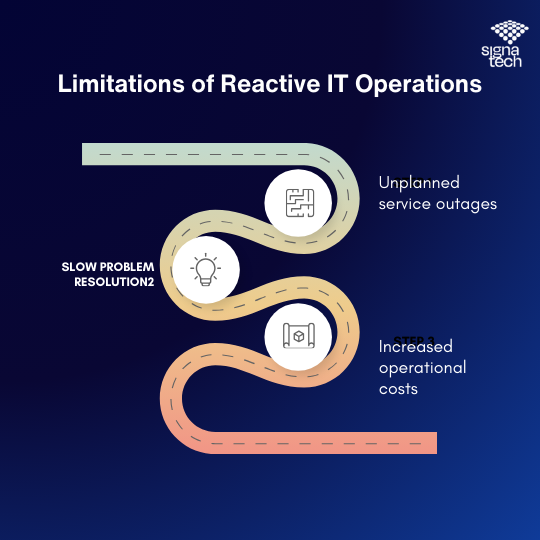
The Limitations of Reactive IT Operations
Reactive IT operations often lead to unexpected downtime, frustrated users, and revenue loss. When issues are identified only after a system fails, businesses face:
- Unplanned service outages
- Slow problem resolution
- Increased operational costs
- Reduced employee productivity
- Poor customer experience
In competitive industries, even a few minutes of downtime can damage a company’s reputation. This makes reactive IT management risky and inefficient in modern environments.
Why Proactive Infrastructure Monitoring Matters
1. Prevents Downtime Before It Happens
One of the biggest advantages of proactive infrastructure monitoring is downtime prevention. By continuously tracking system health, IT teams can detect unusual patterns such as rising CPU usage, memory leaks, or network congestion. Early warnings allow teams to fix issues before they disrupt business operations.
2. Improves System Performance
Proactive monitoring helps maintain optimal performance across IT infrastructure. Regular performance checks ensure applications run smoothly, response times stay low, and systems operate efficiently. This results in a better experience for both employees and customers.
3. Enhances IT Team Efficiency
Instead of spending time firefighting emergencies, IT teams can focus on strategic tasks. Proactive infrastructure monitoring reduces the number of critical incidents, allowing teams to plan upgrades, optimize systems, and support business growth.
4. Supports Scalable IT Environments
Modern businesses often use cloud and hybrid infrastructures that change frequently. Proactive monitoring provides visibility across complex environments, helping IT teams manage scalability without losing control. Whether adding new servers or expanding cloud resources, monitoring ensures stability at every stage.
The Role of Automation and Predictive Insights
The future of IT operations lies in automation and intelligence. Proactive infrastructure monitoring tools now use advanced analytics and machine learning to predict failures before they occur.
Predictive insights analyze historical data to identify patterns that may lead to system breakdowns. Automated alerts notify IT teams instantly, reducing response time and minimizing risk. This shift from manual checks to intelligent monitoring is transforming how IT operations are managed.
Better Security Through Proactive Monitoring
Security threats are evolving rapidly, and IT infrastructure is a common target. Proactive infrastructure monitoring plays a critical role in cybersecurity by identifying unusual activities, unauthorized access attempts, and abnormal traffic patterns.
By detecting security risks early, businesses can prevent data breaches and ensure compliance with industry standards. Continuous monitoring strengthens overall IT security and protects sensitive business information.
Cost Optimization and Business Continuity
Unexpected system failures often result in high repair costs and lost revenue. Proactive infrastructure monitoring helps reduce these expenses by addressing problems early when they are easier and cheaper to fix.
Additionally, proactive monitoring supports business continuity by ensuring critical systems remain available. This reliability is essential for organizations that operate 24/7 or depend on digital platforms for customer engagement.
Proactive Monitoring and the Future of IT Operations
As digital transformation accelerates, IT environments are becoming more complex. Businesses are adopting cloud computing, remote work models, and data-driven decision-making. In this landscape, proactive infrastructure monitoring is no longer optional it is a necessity.
Future-ready IT operations rely on real-time visibility, predictive intelligence, and automation. Organizations that embrace proactive monitoring gain a competitive advantage by delivering reliable services, reducing risk, and improving operational efficiency.
The shift from reactive to proactive IT management marks a major evolution in IT operations. Proactive infrastructure monitoring helps businesses prevent downtime, improve performance, enhance security, and reduce costs. It empowers IT teams to stay ahead of issues rather than constantly reacting to them.
By adopting proactive monitoring strategies, organizations can build resilient IT systems that support long-term growth and digital success. Companies looking to modernize their IT operations can benefit greatly from expert solutions and guidance.
Signatech offers advanced IT and infrastructure solutions designed to help businesses stay proactive, efficient, and future-ready.
Contact us today to learn how proactive infrastructure monitoring can transform your IT operations and support your business goals.